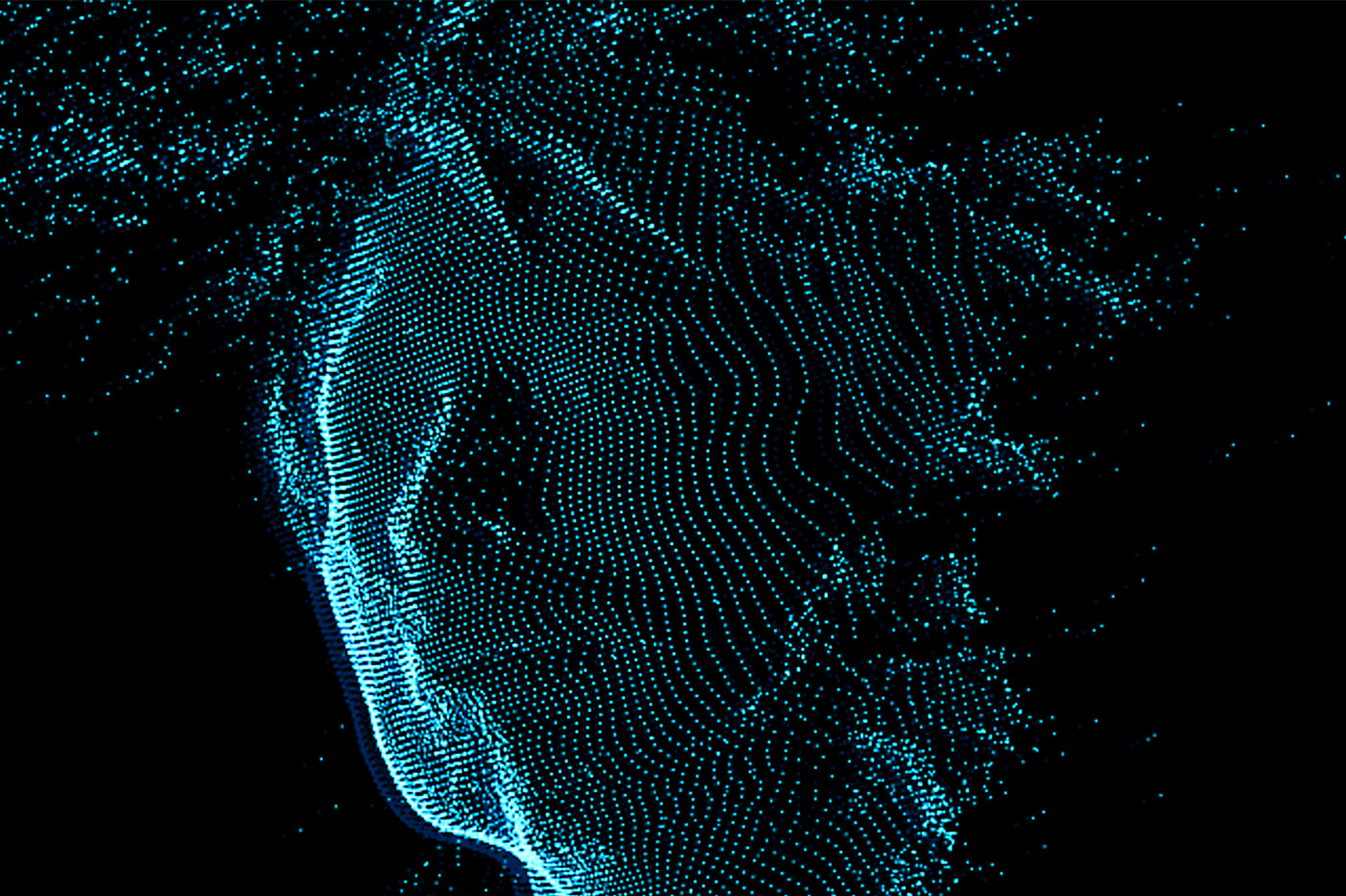
Radiohead
House of Cards Music Video
In November 2007, I attended a dinner party where Radiohead's managers, Chris and Bryce — friends of mine for some time — were also present. During a conversation with Bryce, I mentioned a few things I was working on, including two techniques I was exploring: Lidar Imaging and GeoVideo capture, both of which can capture data in real time. I'm sure it made for riveting conversation.
Lidar Imaging had been around for a while, used primarily for geometric mapping. GeoVideo was a newer technique, developed at a Boston company called Geometric Informatics by Song Zhang and Dale Royer, originally created for medical applications.
The following March, I received an unexpected email from Bryce. Thom had heard about the techniques and wanted to know more — and Bryce said Thom would be reaching out directly. I didn't expect to hear from him within hours, but that's what happened. Thom wrote asking me to explain the whole thing in more detail.
What followed moved so quickly that the chronology is still a blur, but it went something like this: the band wanted to see what the imagery looked like, so a meeting with Thom was arranged in Oxford within a few weeks. I scrambled to contact Song Zhang, who connected us with Dale Royer and Alan Cohen at Geometric Informatics in Boston. We arranged for Dale and his team to fly to New York to conduct tests at The Mill — a visual effects company with whom I had a strong working relationship — so I could bring those tests with me to London the following week.
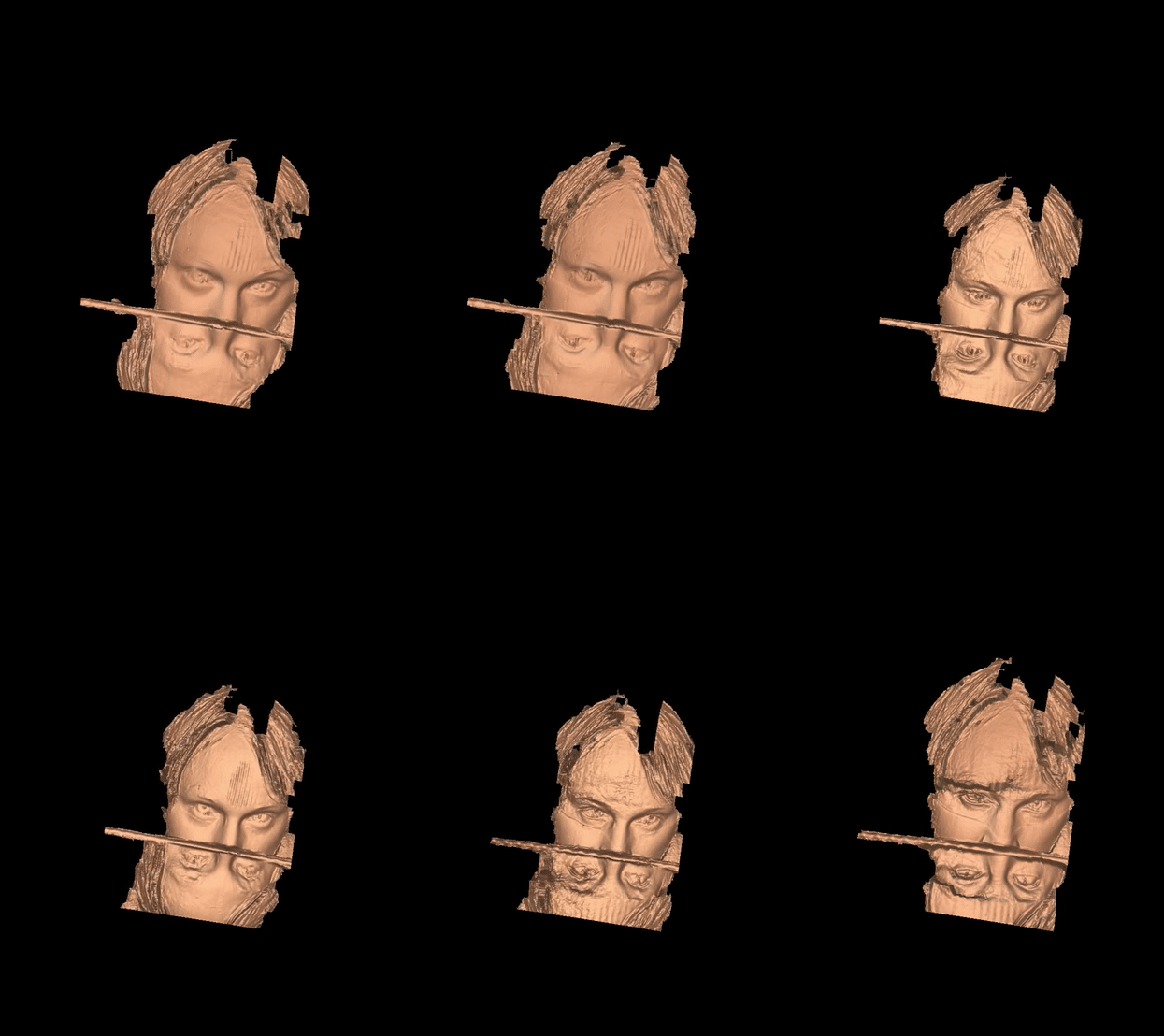
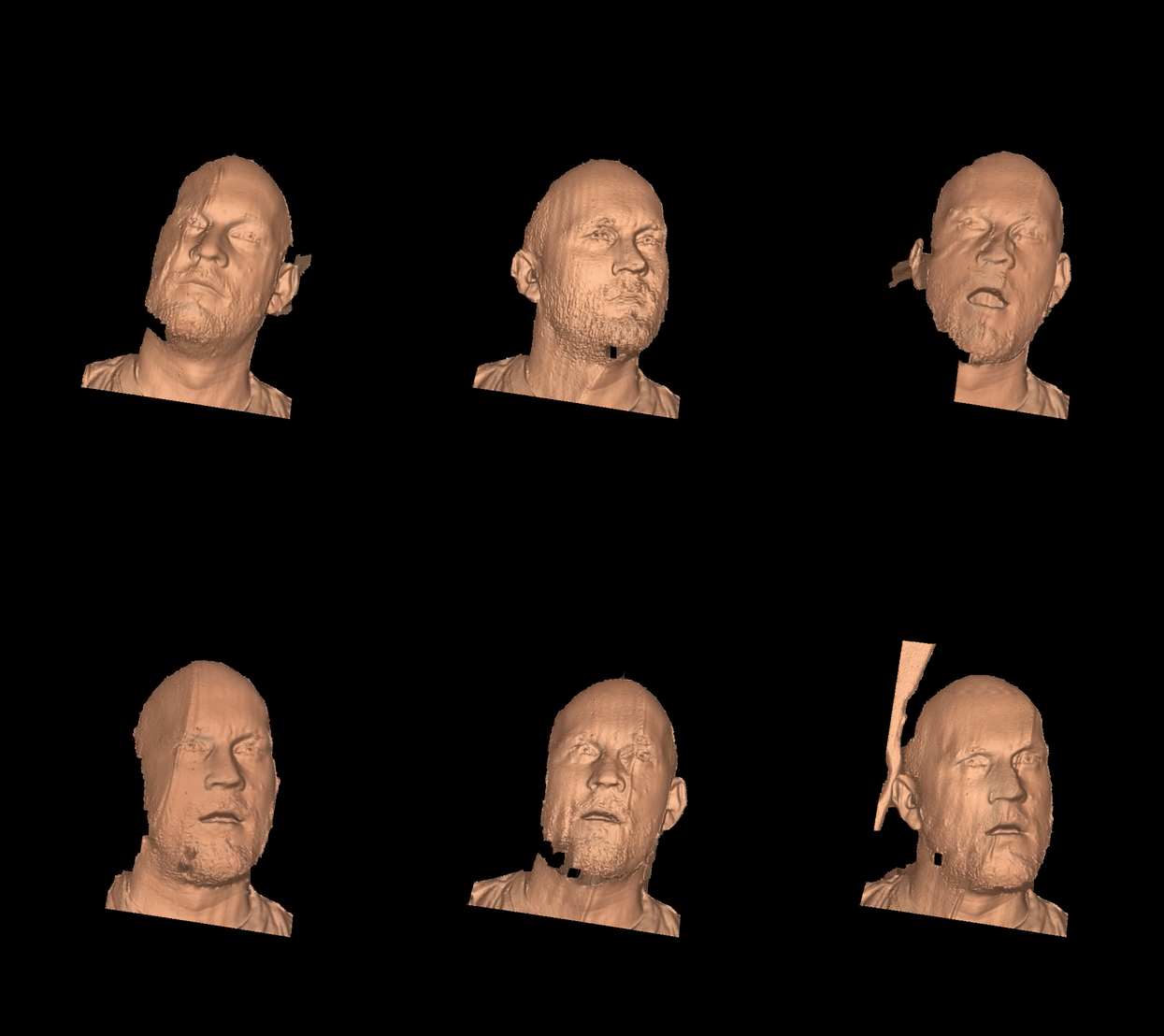
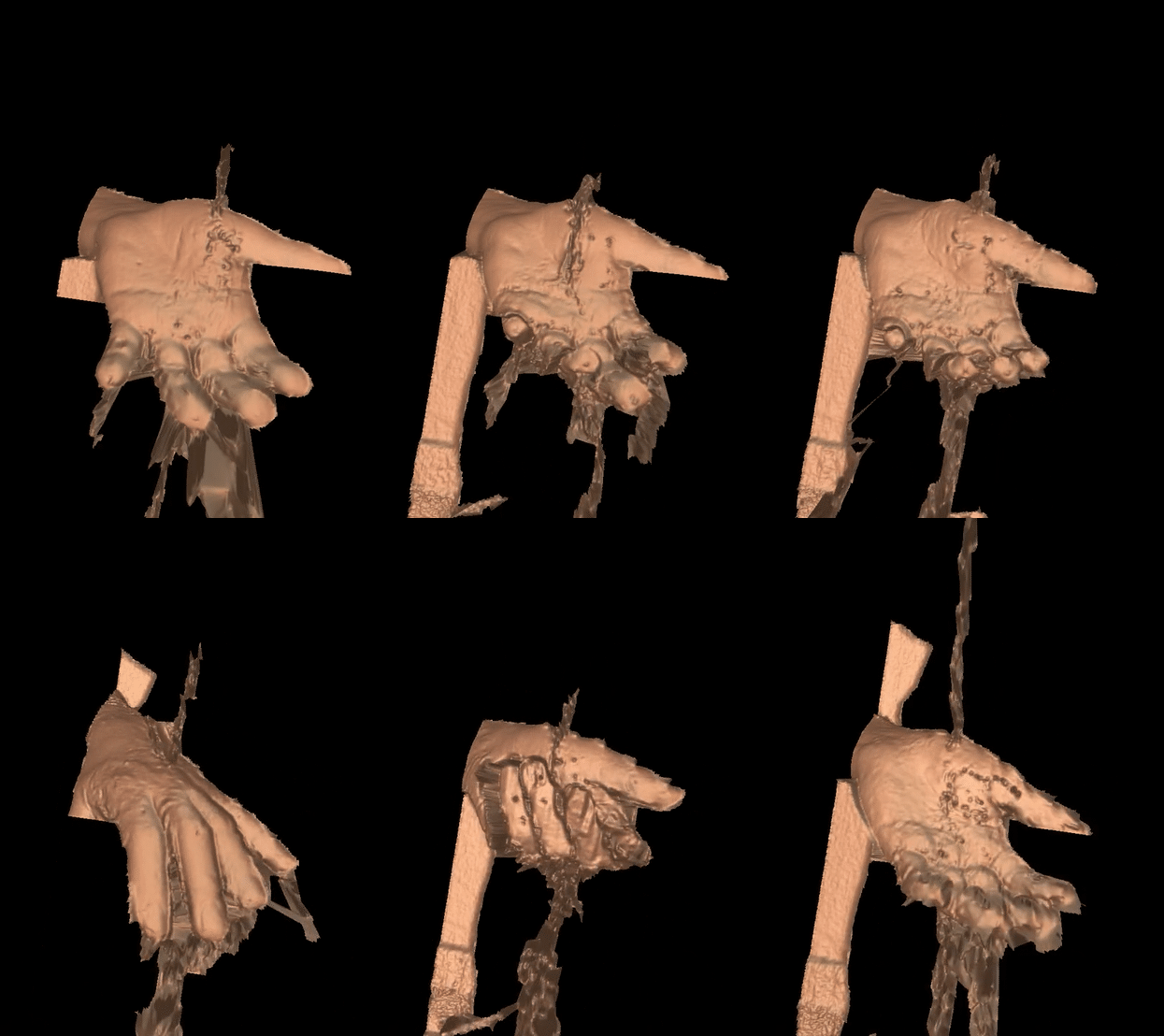
I flew in from Los Angeles while Dale and Alan, along with the scanner, flew in from Boston. We all convened at The Mill's offices in downtown New York early one crisp March morning to discuss a plan of attack. It was March 24th, a Monday. I was to meet with Thom in Oxford the following Friday, April 4th, and had a shoot in Los Angeles on March 29th. Things were moving fast.
Our primary goals for the test were to understand what the data looked like aesthetically, how we could disrupt and manipulate its capture, and what we could do with it in post-production. I then met with Chris, the band's manager, and Thom at the Oxford Museum over a bowl of soup and some orange squash. I showed Thom all the test clips The Mill had worked on until just a few hours before our meeting. We agreed that we needed a treatment to put the imagery in context — something that gave the data meaning rather than letting it exist as eye candy that made no sense.
For the treatment, I wanted to draw on the infrastructural collapse embedded in the lyrics of "House of Cards" without being literal about it. A director interpreting an artist's lyrics too literally can easily come across as misguided or outright cheesy. Instead, I was drawn to the idea of watching the world fall apart while remaining complacent — even numbed— until it suddenly becomes personal. Once the concept was approved, production had to move quickly. The band was about to embark on an extensive US tour, and we had just one day with Thom before it began in West Palm Beach, Florida, on May 3rd — barely a month after we'd met in Oxford. One thing was certain: we were going to Florida.
After an intense pre-production period in Los Angeles, the LA crew flew out to West Palm Beach. We spent a few days scouting locations and awaited the arrival of Rick Yodar from Velodyne and Dale from Geometric Informatics. The shoot itself was a highly unconventional affair — no camera, just a small film crew, a team of engineers, and two kinds of scanning equipment.
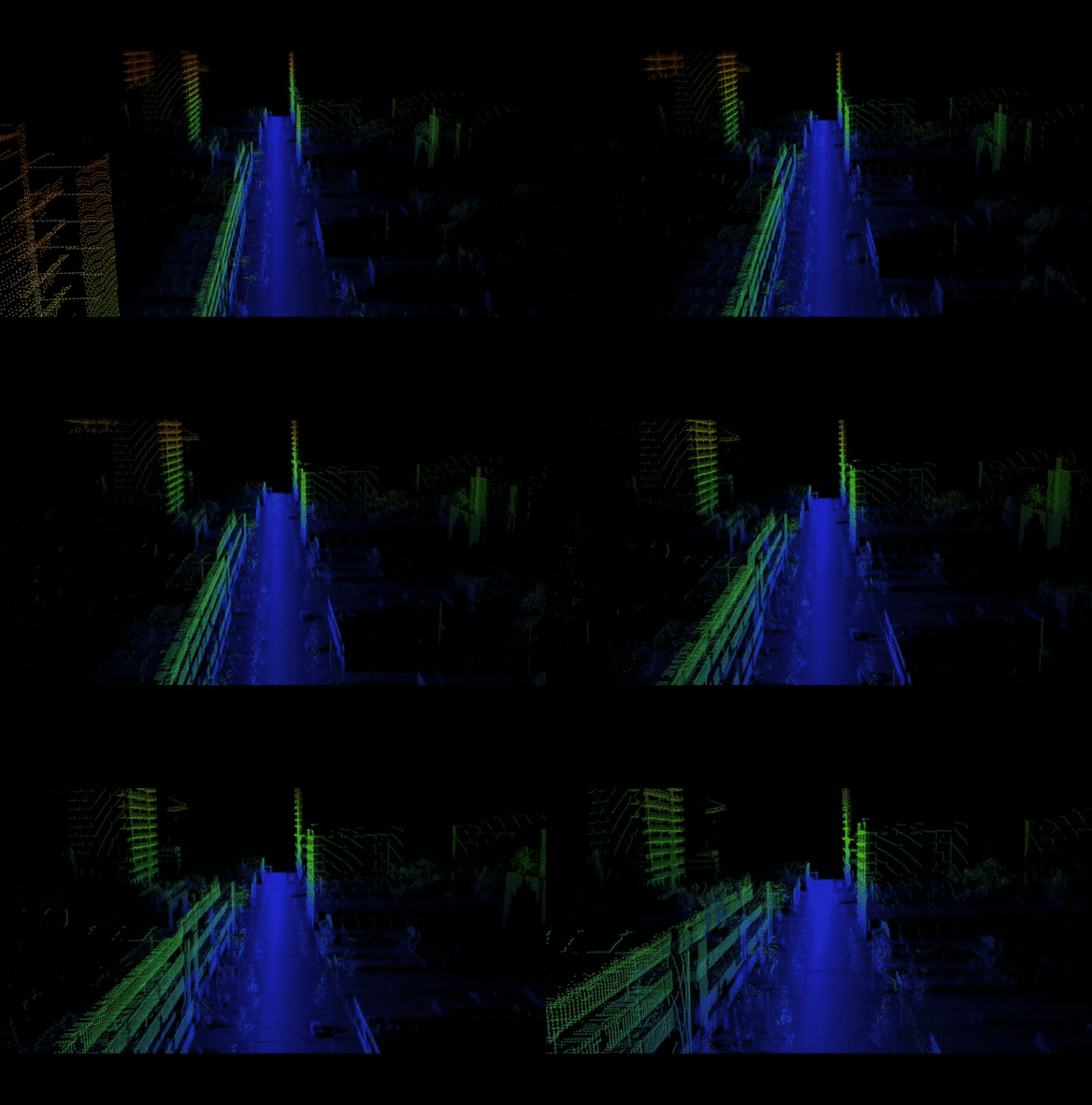
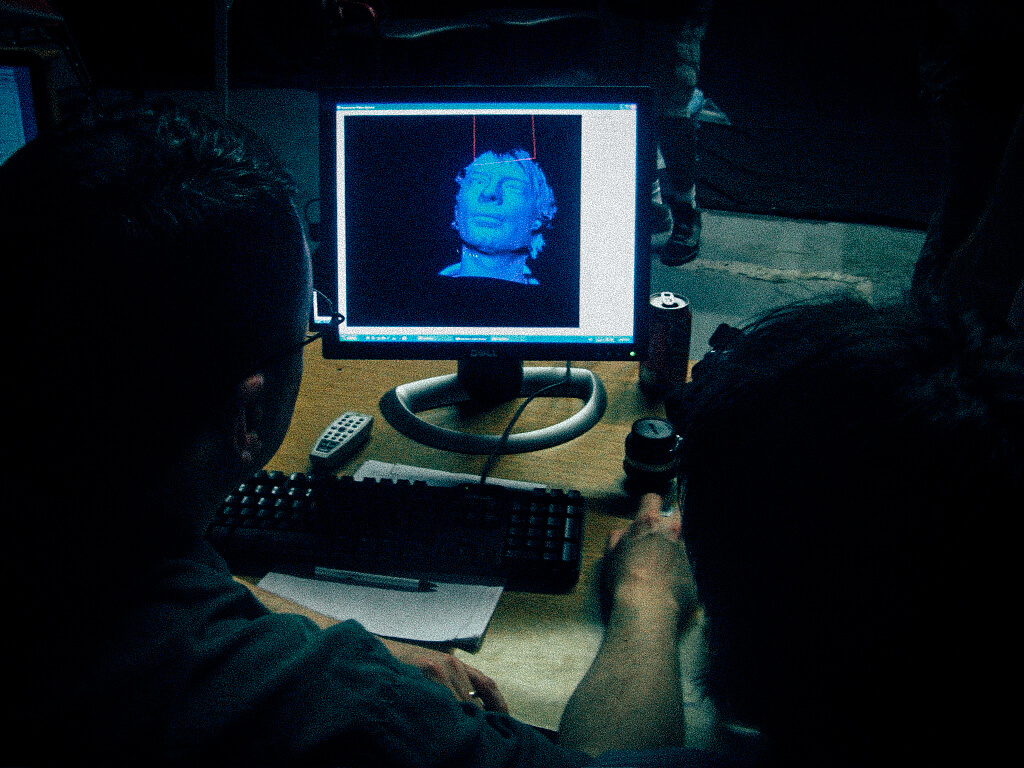
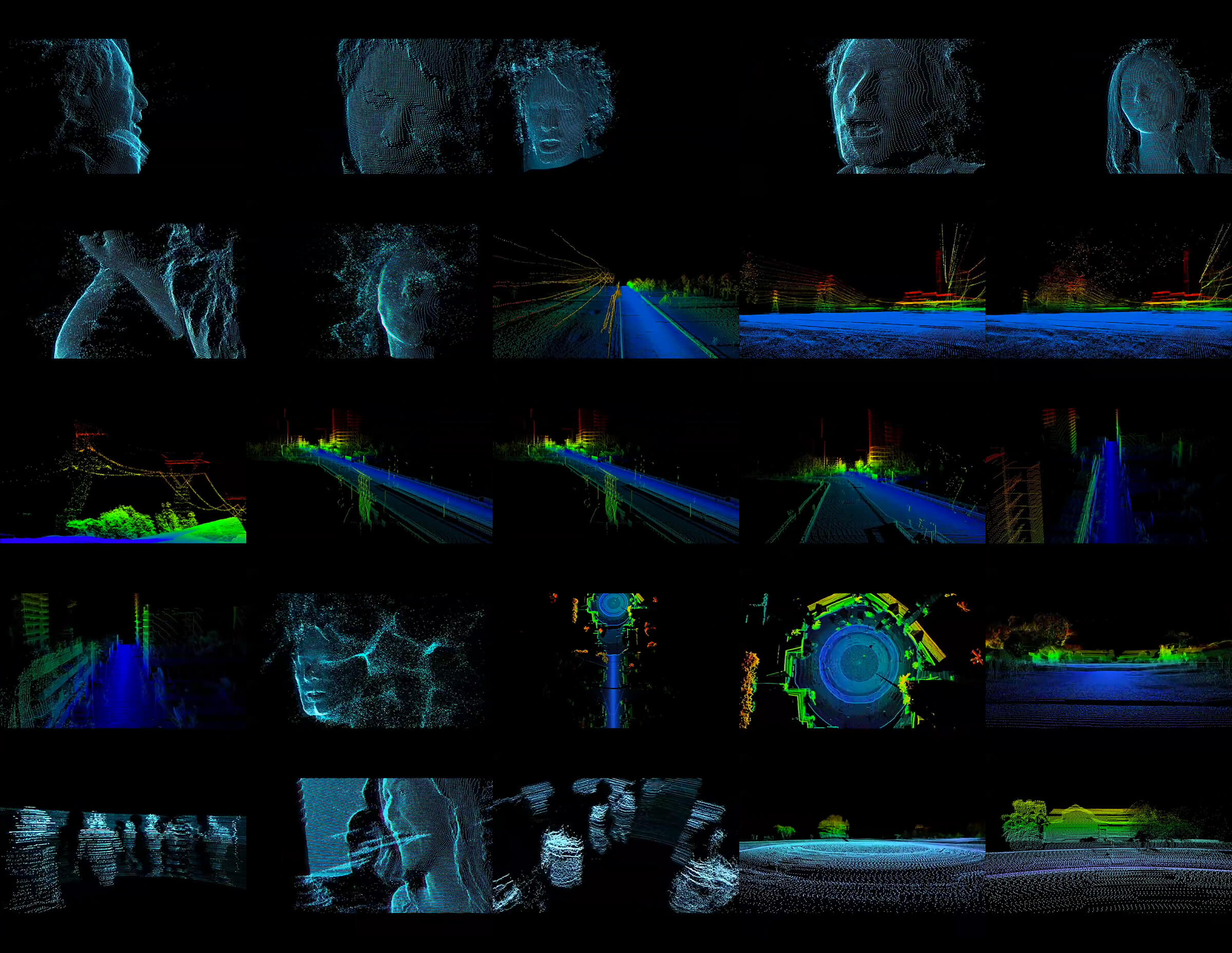
The most challenging adjustment for me was that we couldn't see what the scans looked like until the data had been processed, which was a separate step that followed the shoot entirely. The Geometric Informatics system was slightly more manageable because it offered a live 50/50 video feed, giving us something to look at. The Lidar scanner was a different matter. With 64 lasers rotating and firing in a 360-degree radius 900 times per minute, we had no visual reference at all — we simply had to trust Rick's judgment on whether a scan was good. This system produced all the exterior and party scenes in the video. For the exterior shots, the scanner was mounted vertically on the back of a bus, capturing everything behind us from the ground up to the sky in a continuous data stream. For the party scene, it was repositioned on a horizontal axis and mounted to a dolly, moving through the space so the data was captured laterally, from left to right
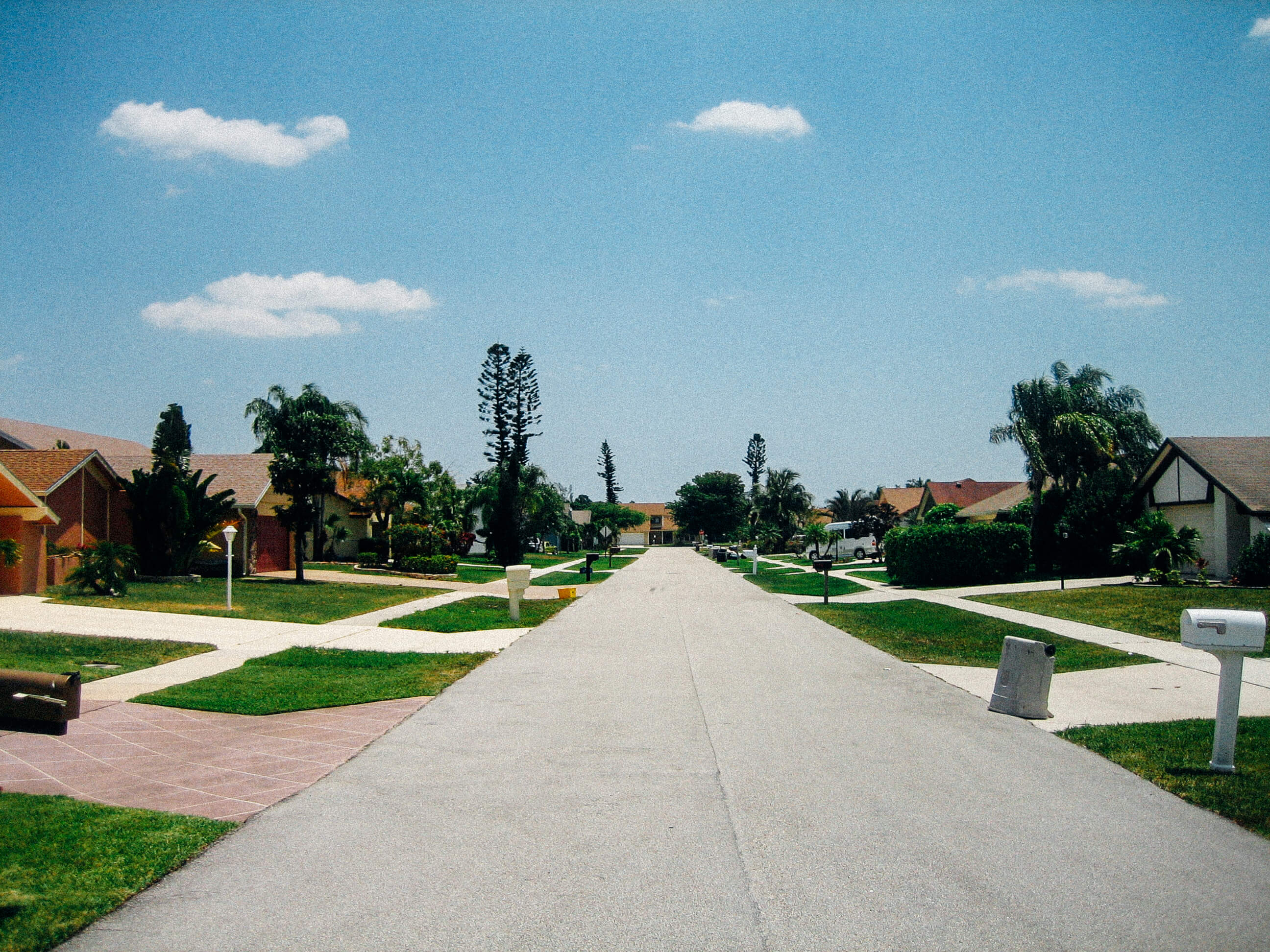
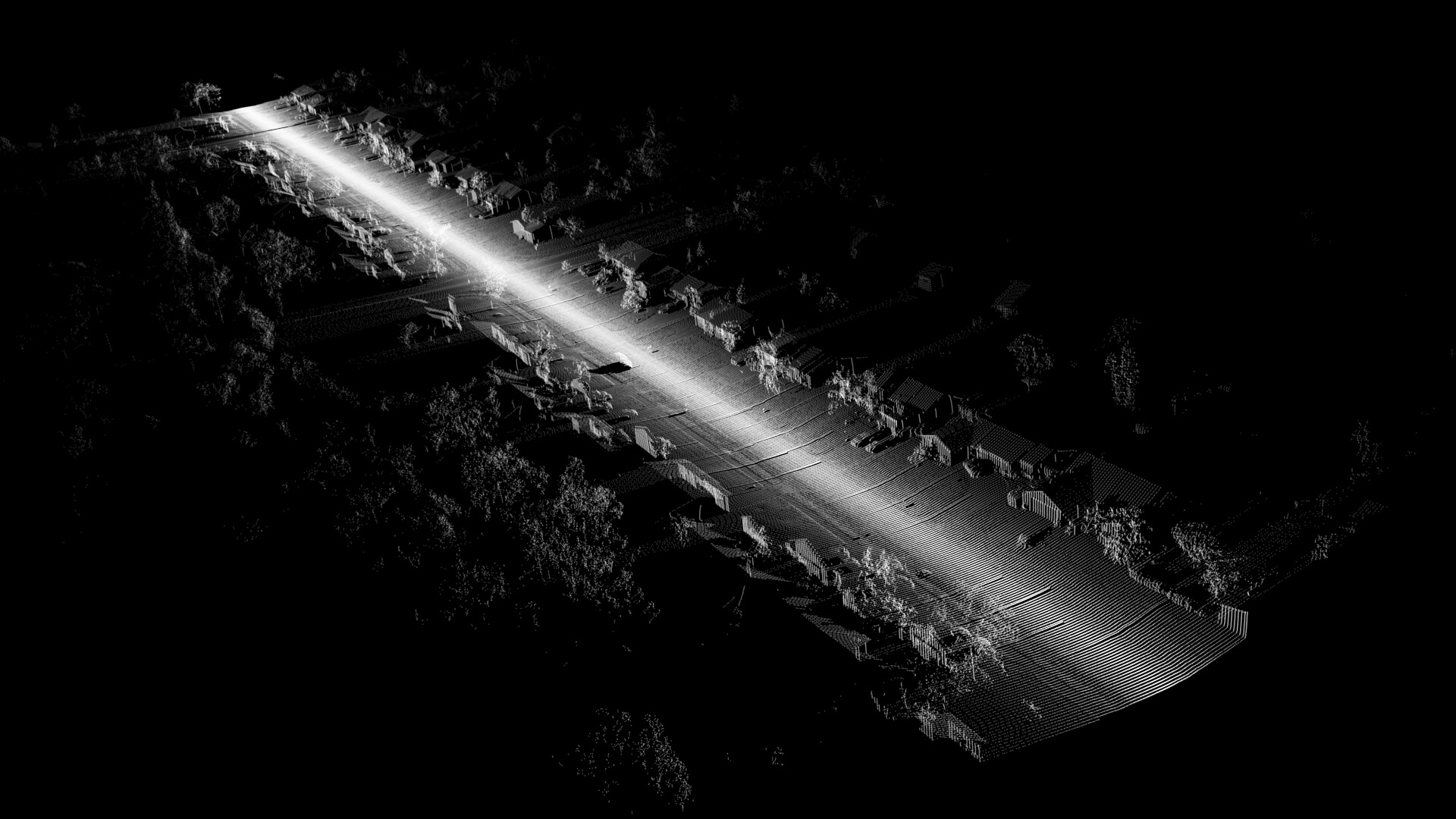
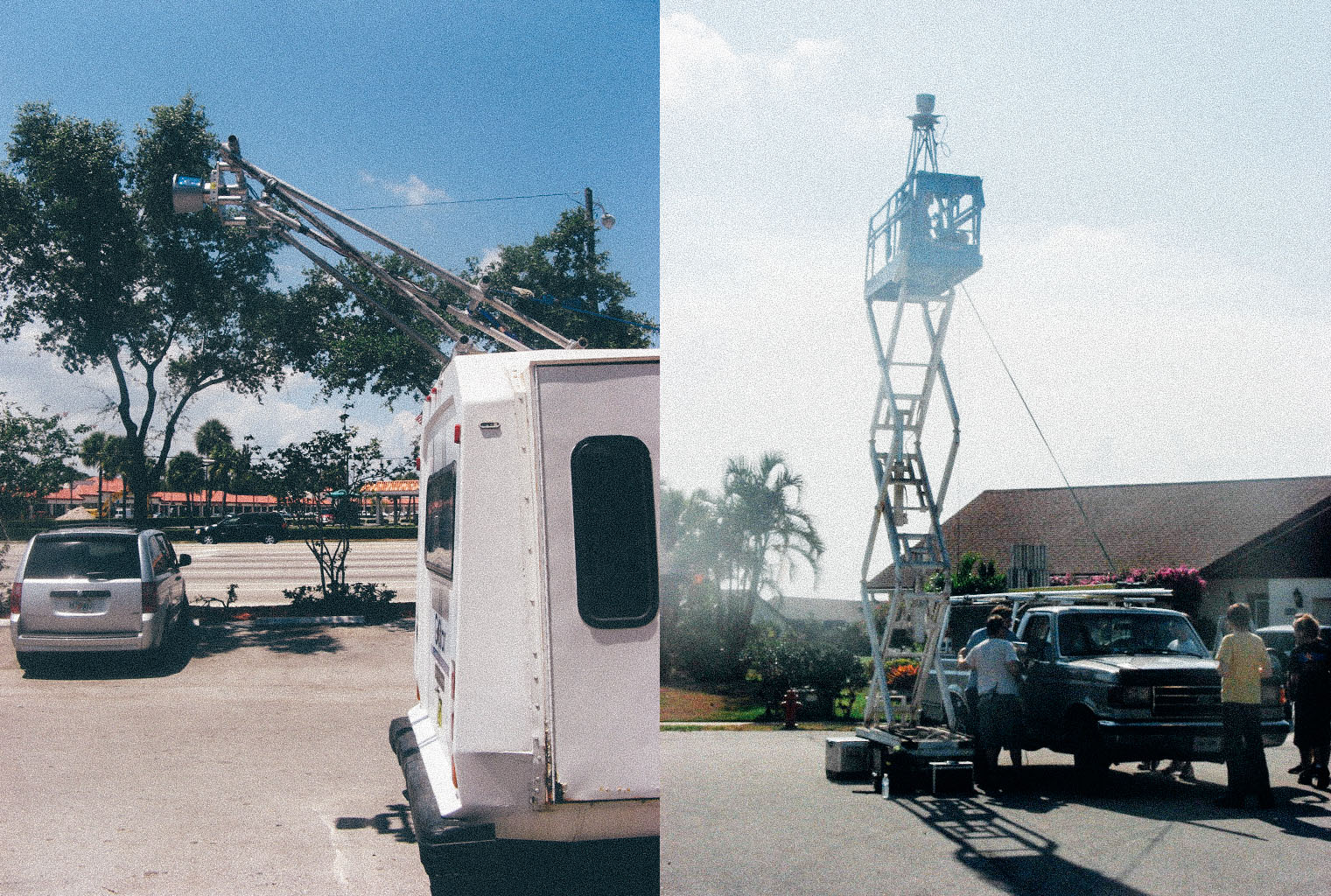
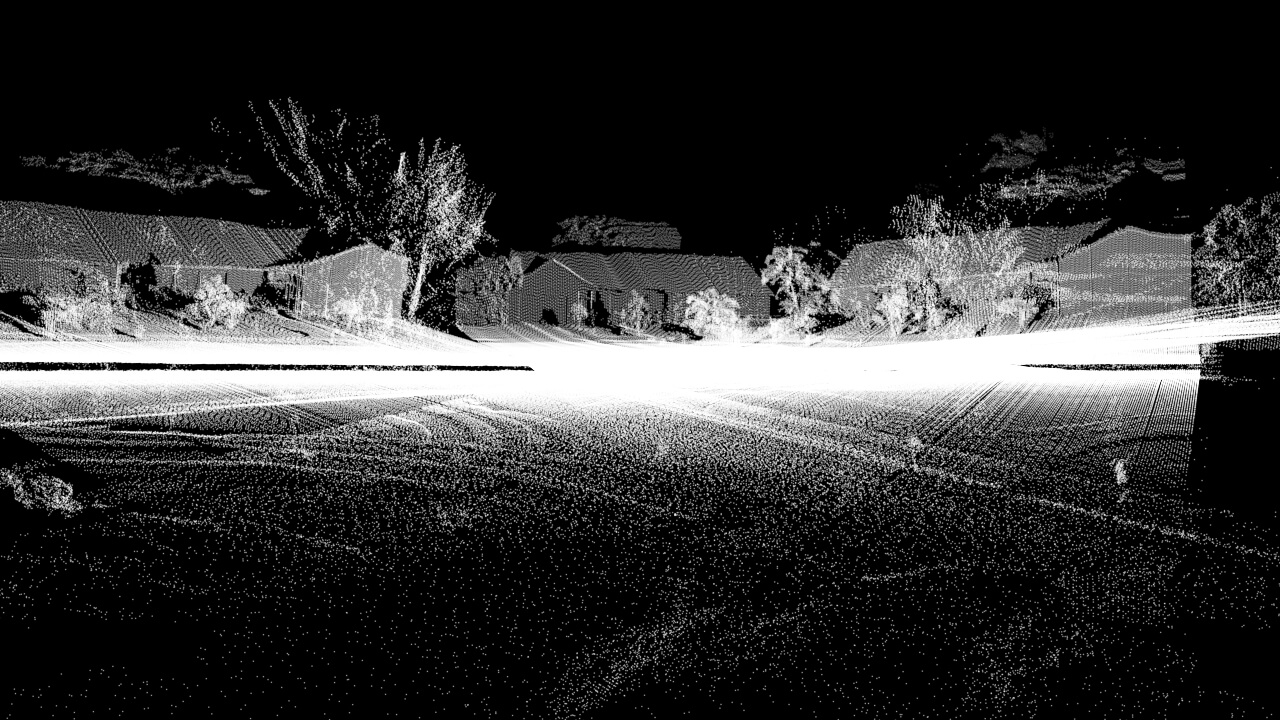
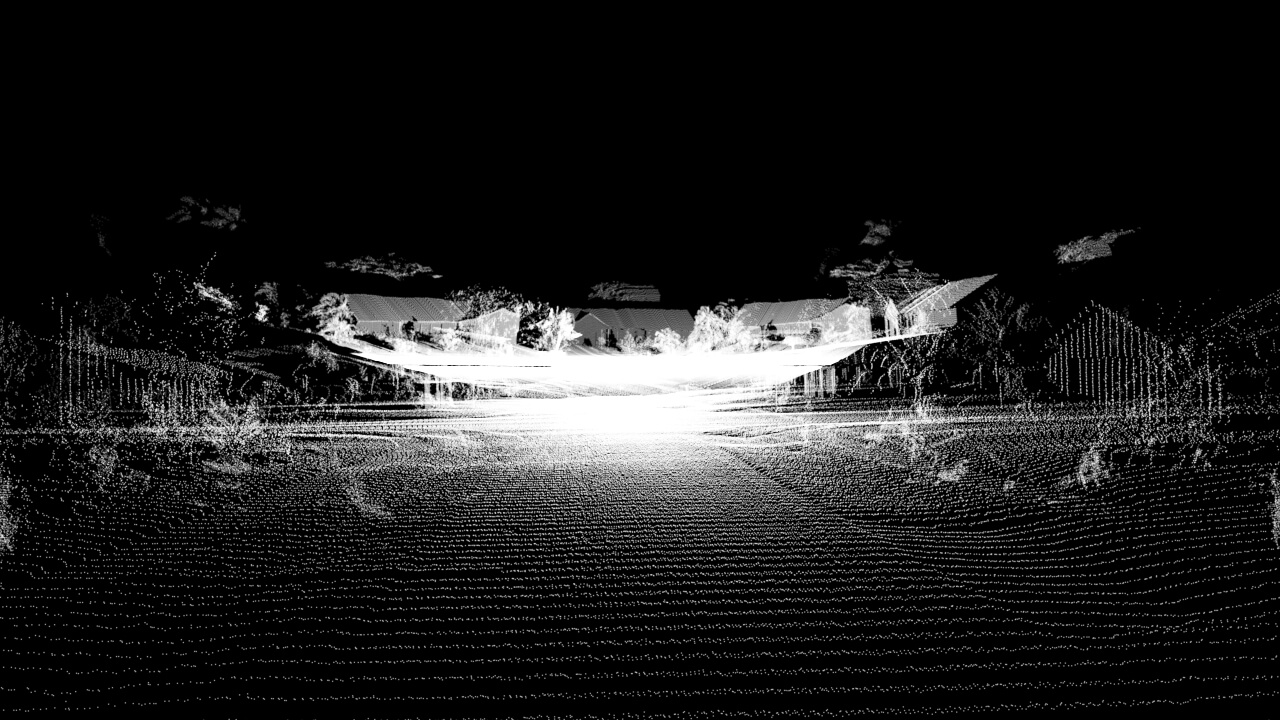
Below is an example of a good scan vs. a lousy scan.
Good Scan
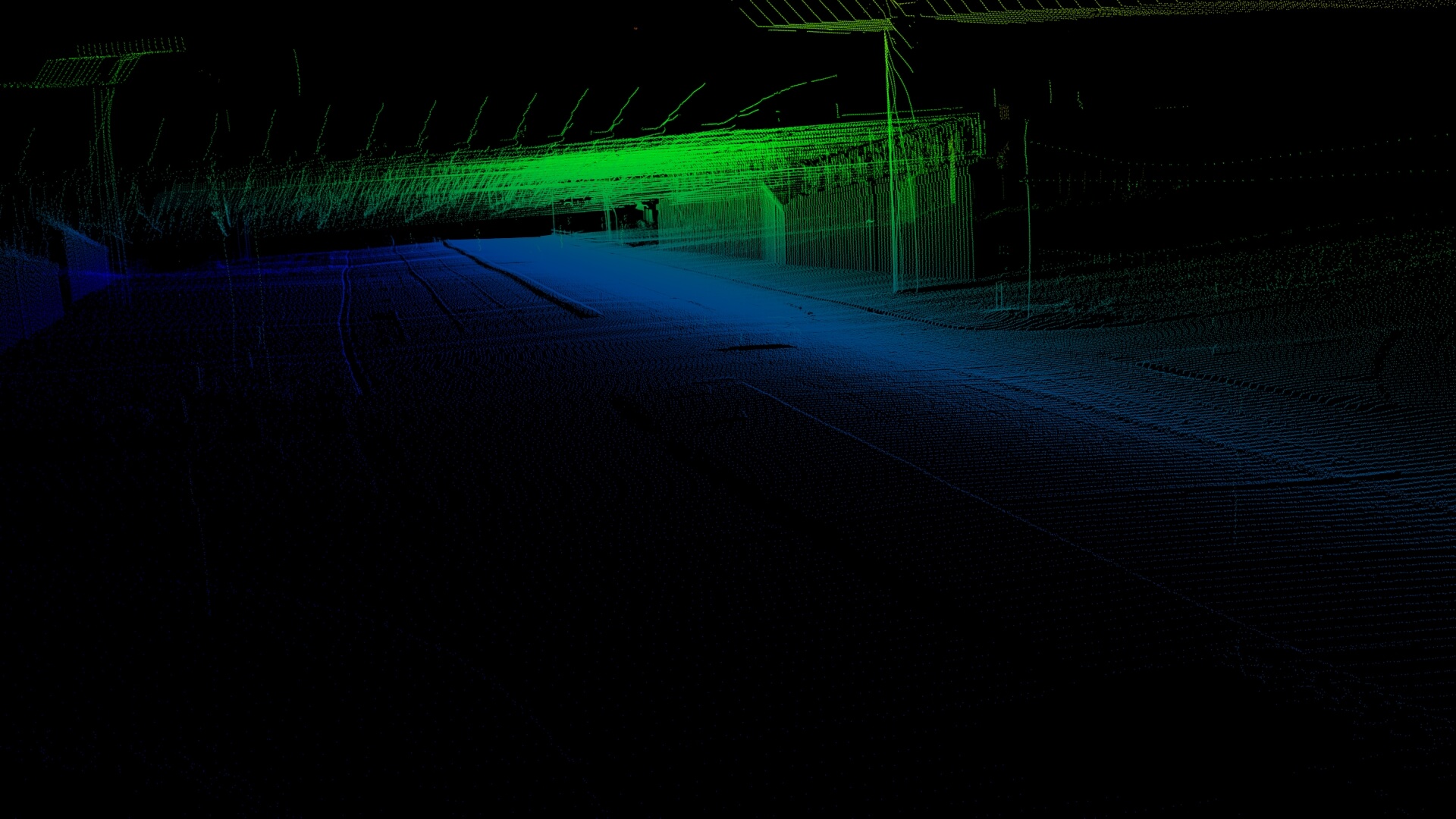
vs. Bad Scan
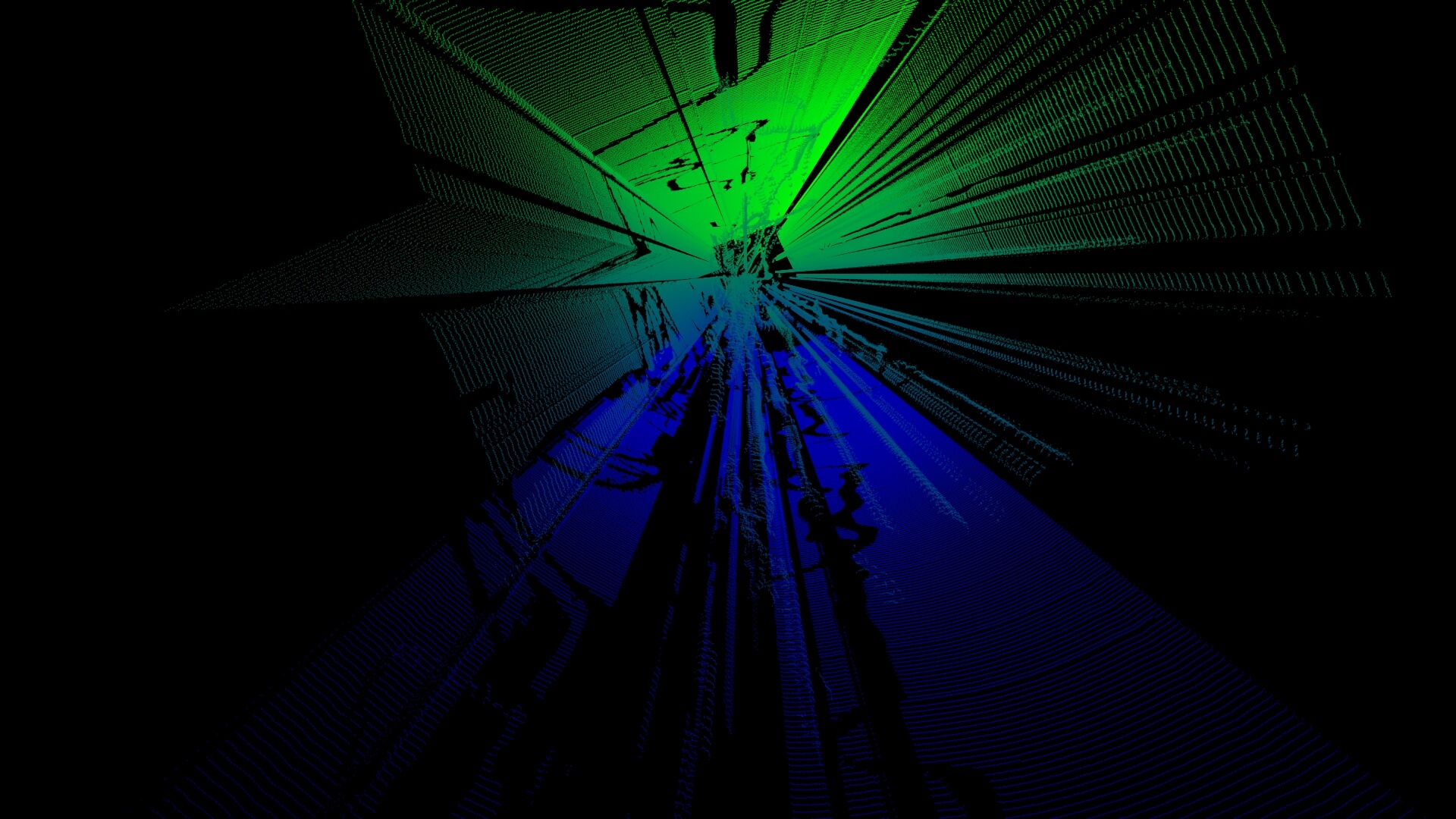
Through trial and error, we discovered that ten mph was the optimal speed for capturing clean scans. We drove at that pace across bridges, through downtown high-rises, down dirt roads flanked by power lines, and along entirely residential streets — if it was there, we scanned it. All with a police escort, of course.
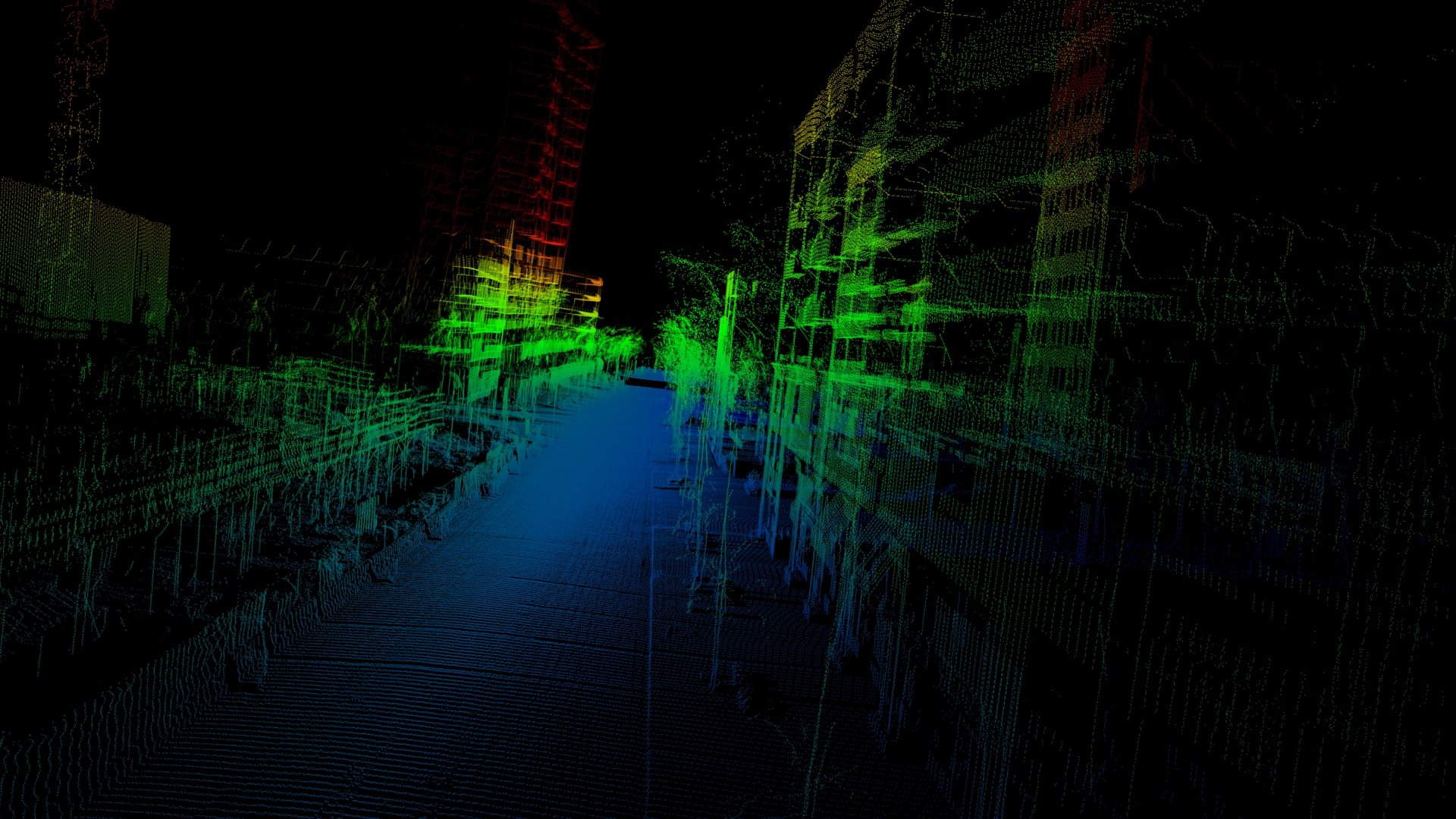
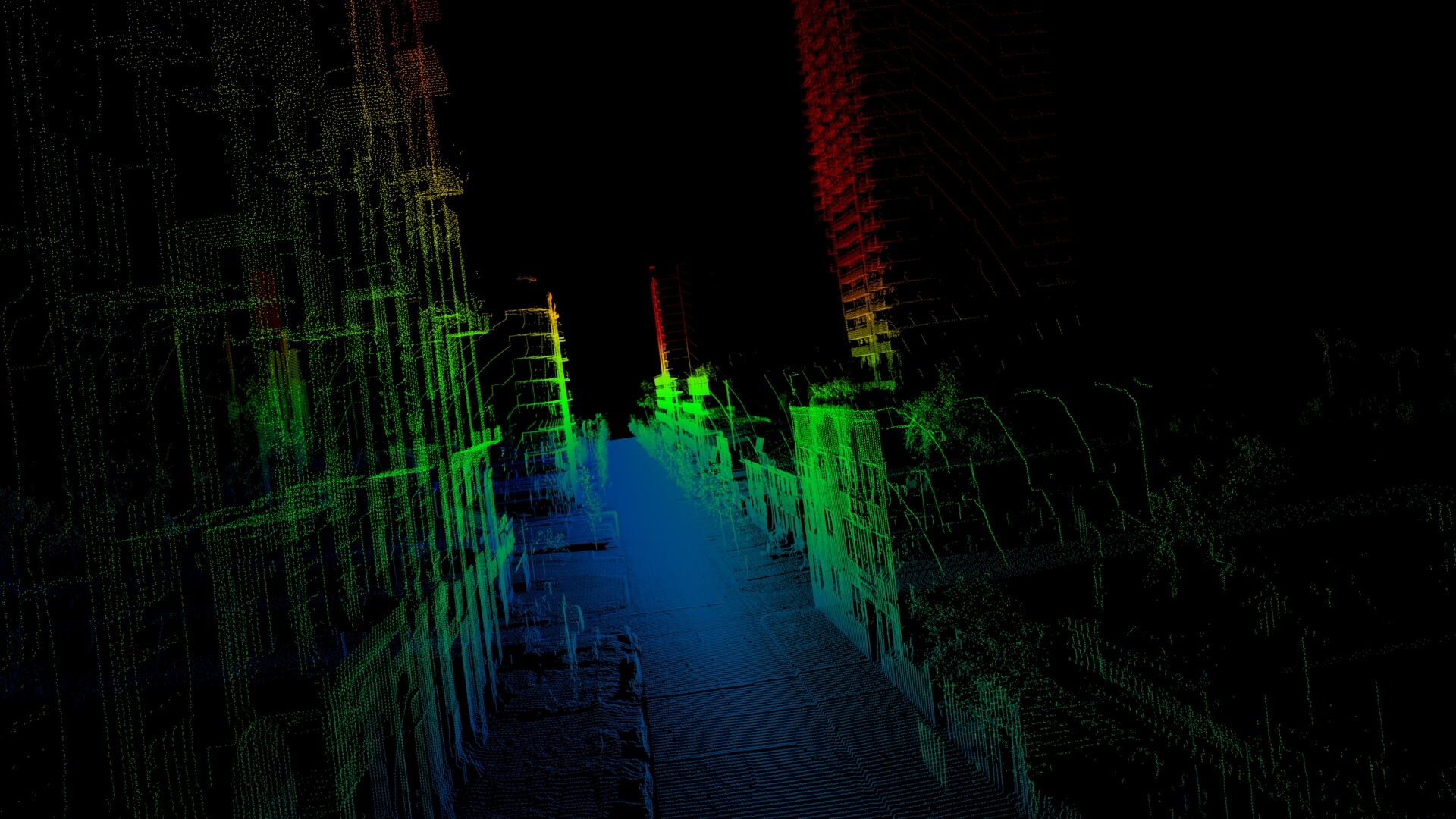
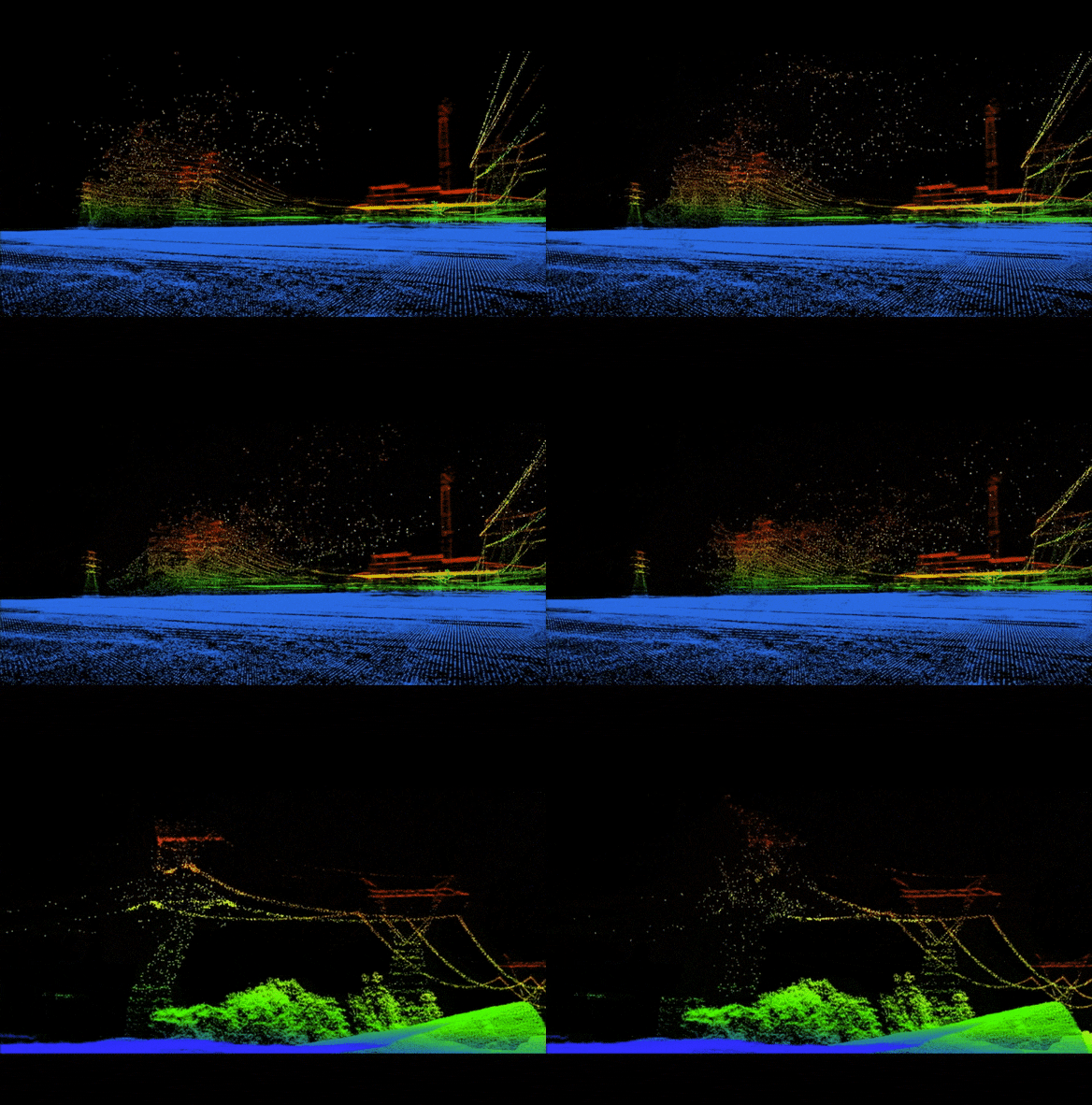
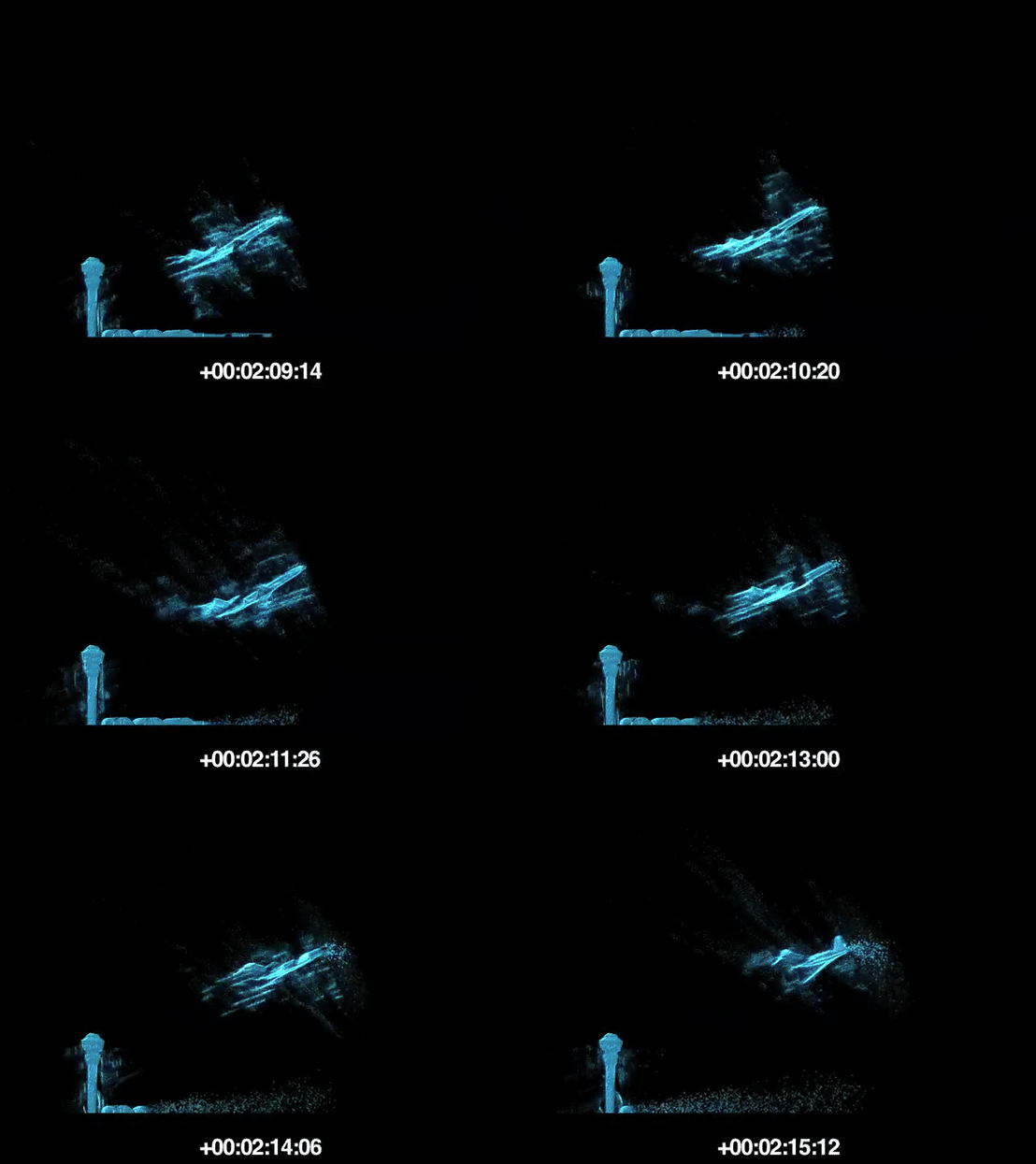
We even secured permission to drive alongside the control tower at West Palm Beach Airport. The idea was to capture the tower with a plane taking off, only for both to vaporize. I had a 1:100 scale Boeing 727 model ready to scan on the studio day, specifically for that composite, but we discovered that control towers use a special glass that the scanner simply cannot read. We were left with little more than a featureless stump of a building and, ultimately, no usable shot. We found a small 'Herpa' model of a control tower at a local hobby store and scanned that instead.
The clip below shows the plane scene we reconstructed but ultimately deemed too sensitive to keep in the edit.
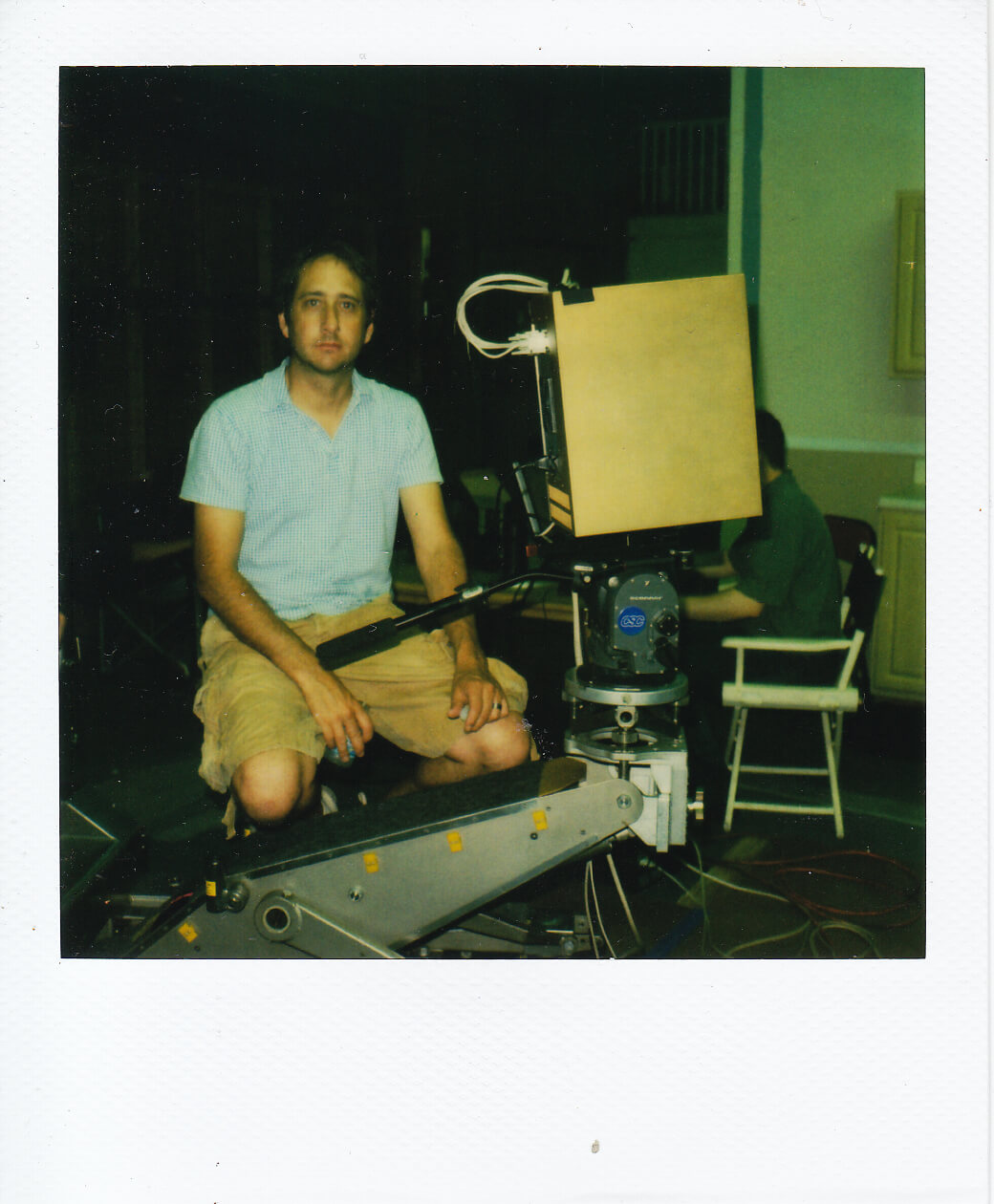
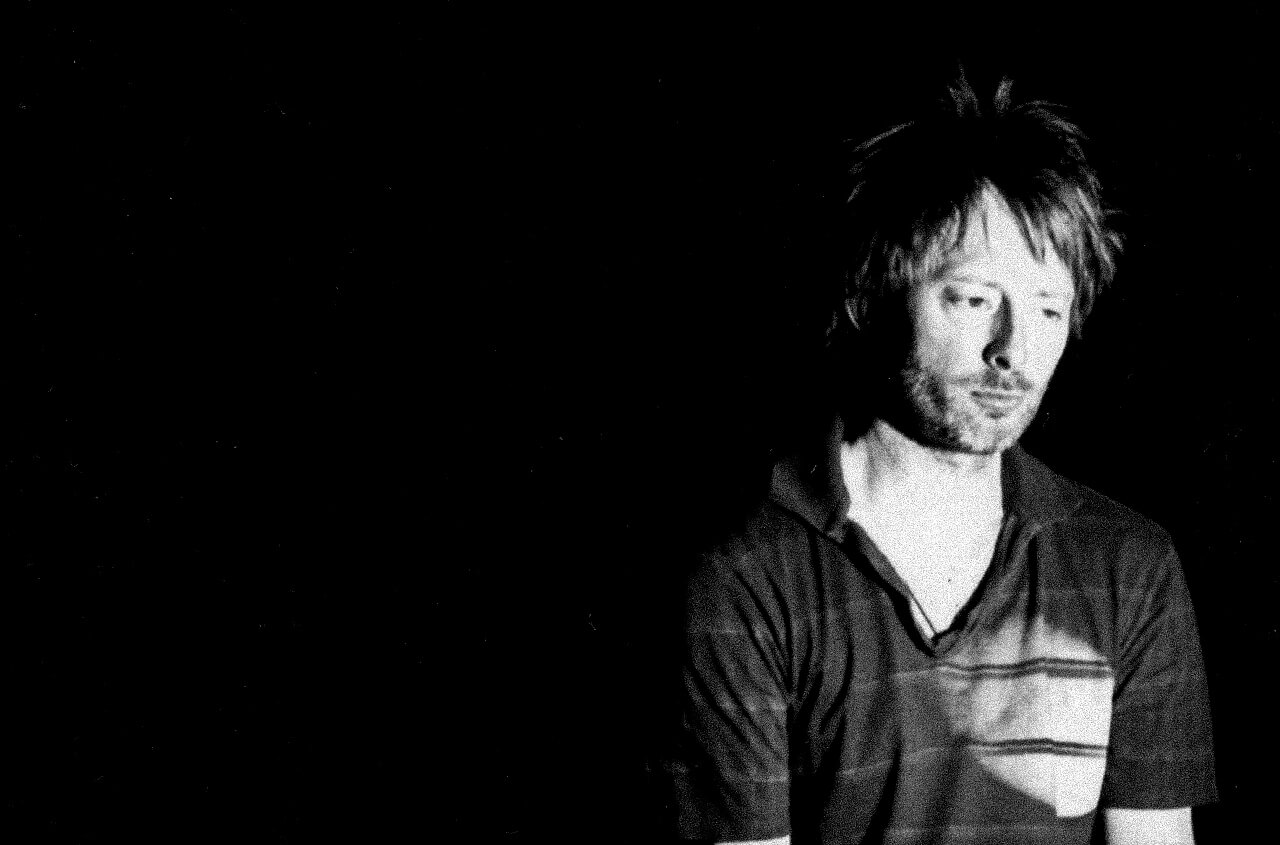
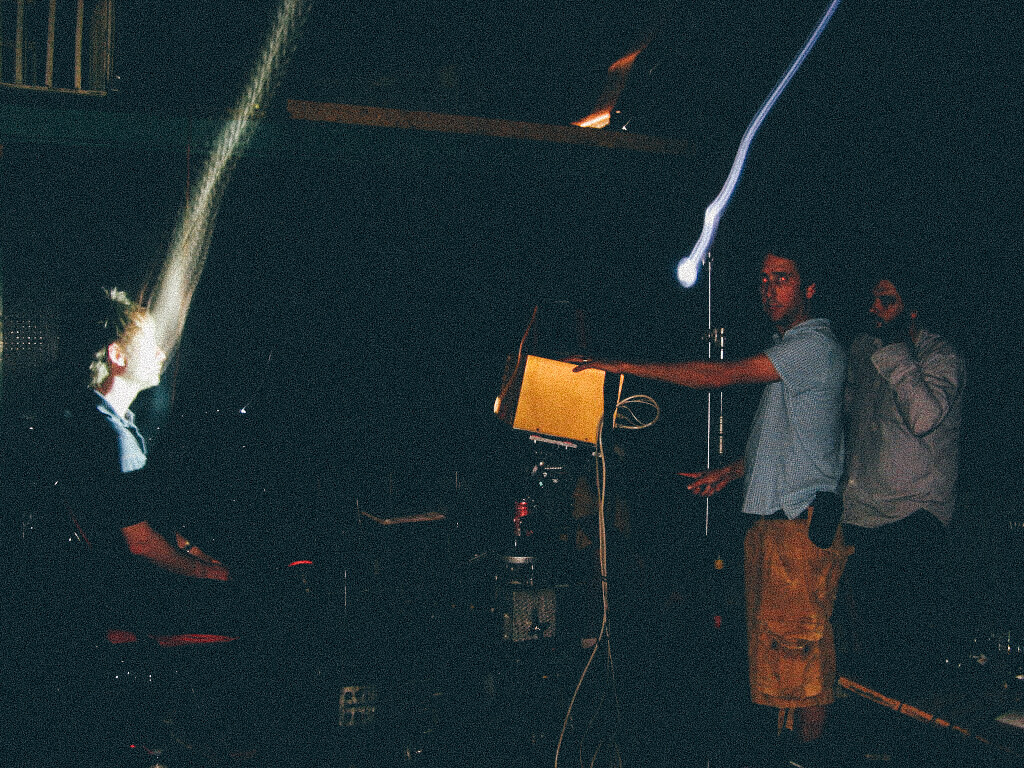
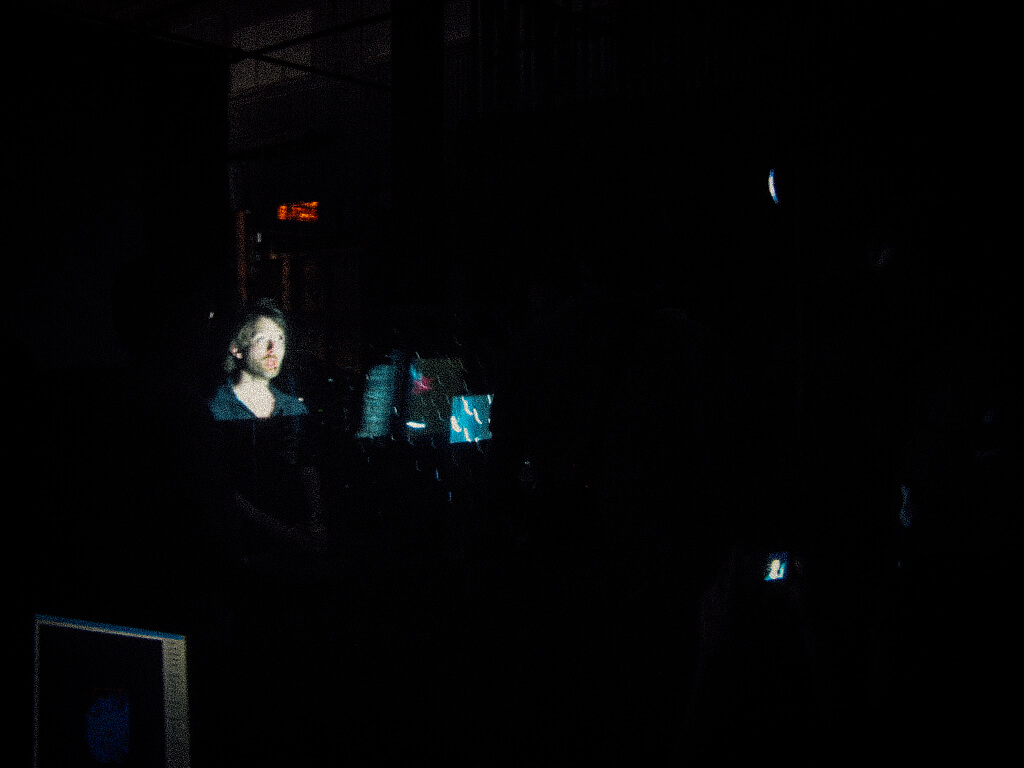
For Thom's performance, we used the Geometric Informatics system — nicknamed "the Microwave" for its resemblance to a large metal kitchen appliance — operated by Dale Royer. We set up at G-Star Studios in West Palm Beach, a public charter school for the arts whose facilities and students we were lucky enough to use. The students got to work on the production first hand, which we hoped was as educational for them as it was energizing for us.
We had three major scenes to capture that day. The first was Thom's full performance, followed by a series of alternate takes in which we tried to disrupt the data in various ways — using water, Perspex glass coated in glass beads, feathers, rocks, and even directing pinpoints of light directly at the sensors. A lovely actress named Lauren Mayer played the female role and also performed the song. Finally, we captured the large party scene that closes the video, in which we moved through the crowd, out into the cul-de-sac, and turned around — only to find our world had vanished entirely.
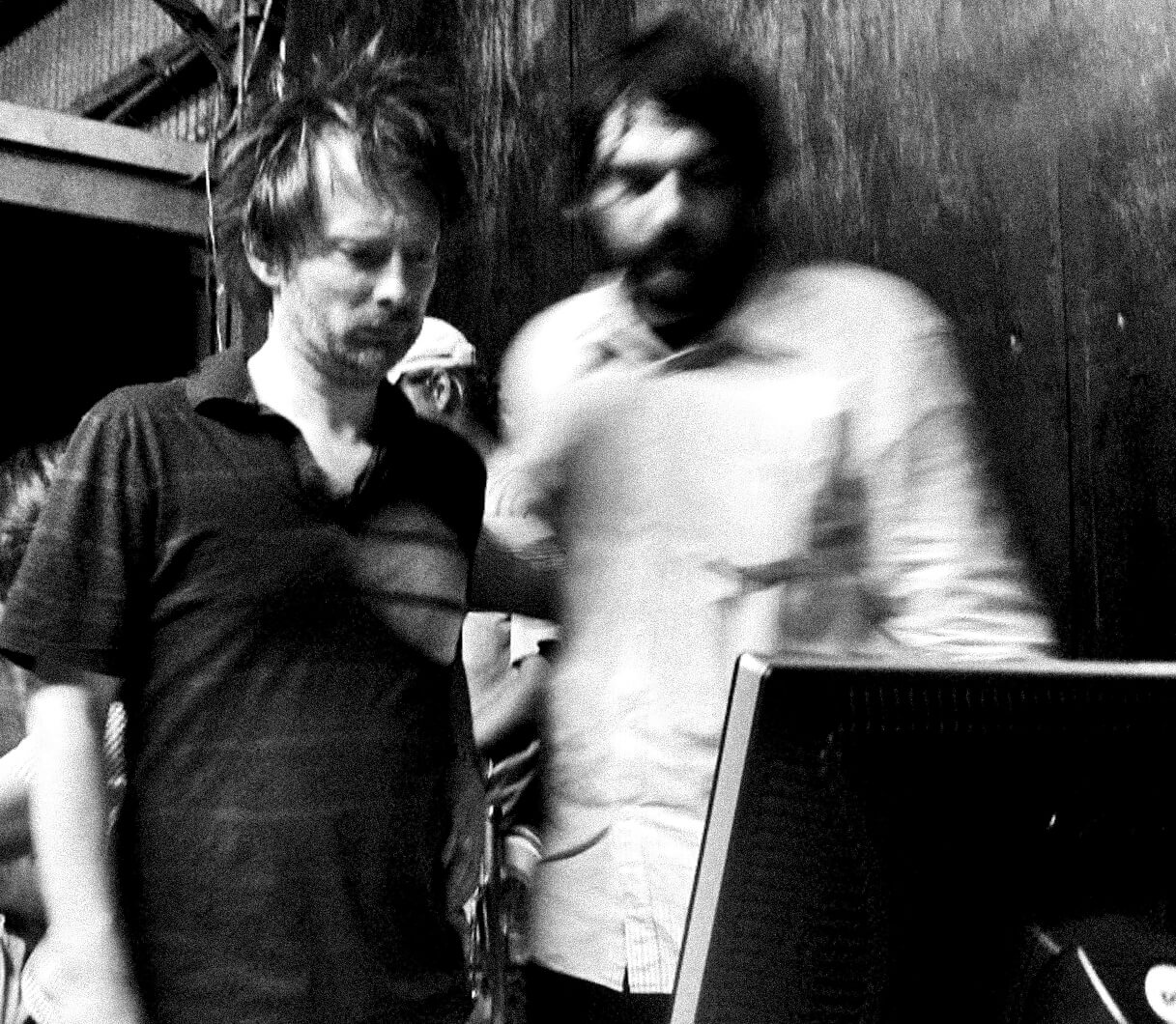
Back in LA, my editor Nicholas Wayman-Harris and I sat down to build a timed offline edit using still images, reference footage, and timecode to give everyone a working cut to reference. Our days were divided between the edit suite in West LA and rushing down to the Syndicate in Santa Monica to review raw data files as they came in from the render farm — which, for all we knew, could have been anywhere, though rumor had it somewhere in Vancouver.
Once we had the files, we faced the painstaking task of choreographing camera moves blind. With a full 360-degree perspective to work with, every decision about where the camera would travel through the space was essentially a leap of faith. Once we committed and hit go, it was fifteen hours before we could see the result — and if anything needed tweaking, another fifteen hours after that. No VFX work could begin until every camera move was locked to the data files, so it's easy to see how quickly this process could become precarious on a tight schedule.
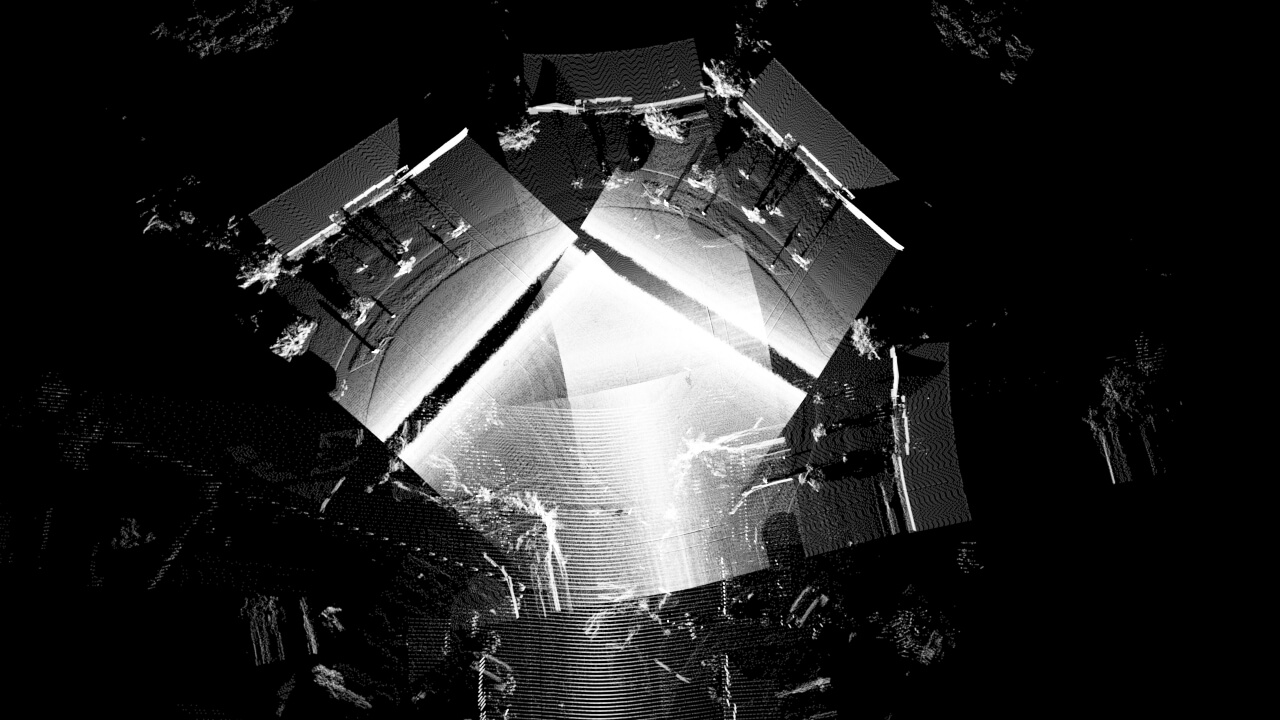
Presenting an offline edit without actual footage was a first for me. Nicholas and I had to get creative, piecing together reference files and low-resolution data passes into something that could serve as a stand-in for the finished video. We needed the band's sign-off before VFX work could begin — the team could only work on locked shots. Once approved, the guys got to work.
We worked alongside a fantastic team of artists at the Syndicate (now no longer there), headed by Ben Grossman and Magdalena Wolff, and spent the next several weeks piecing the shots together with their digital team.
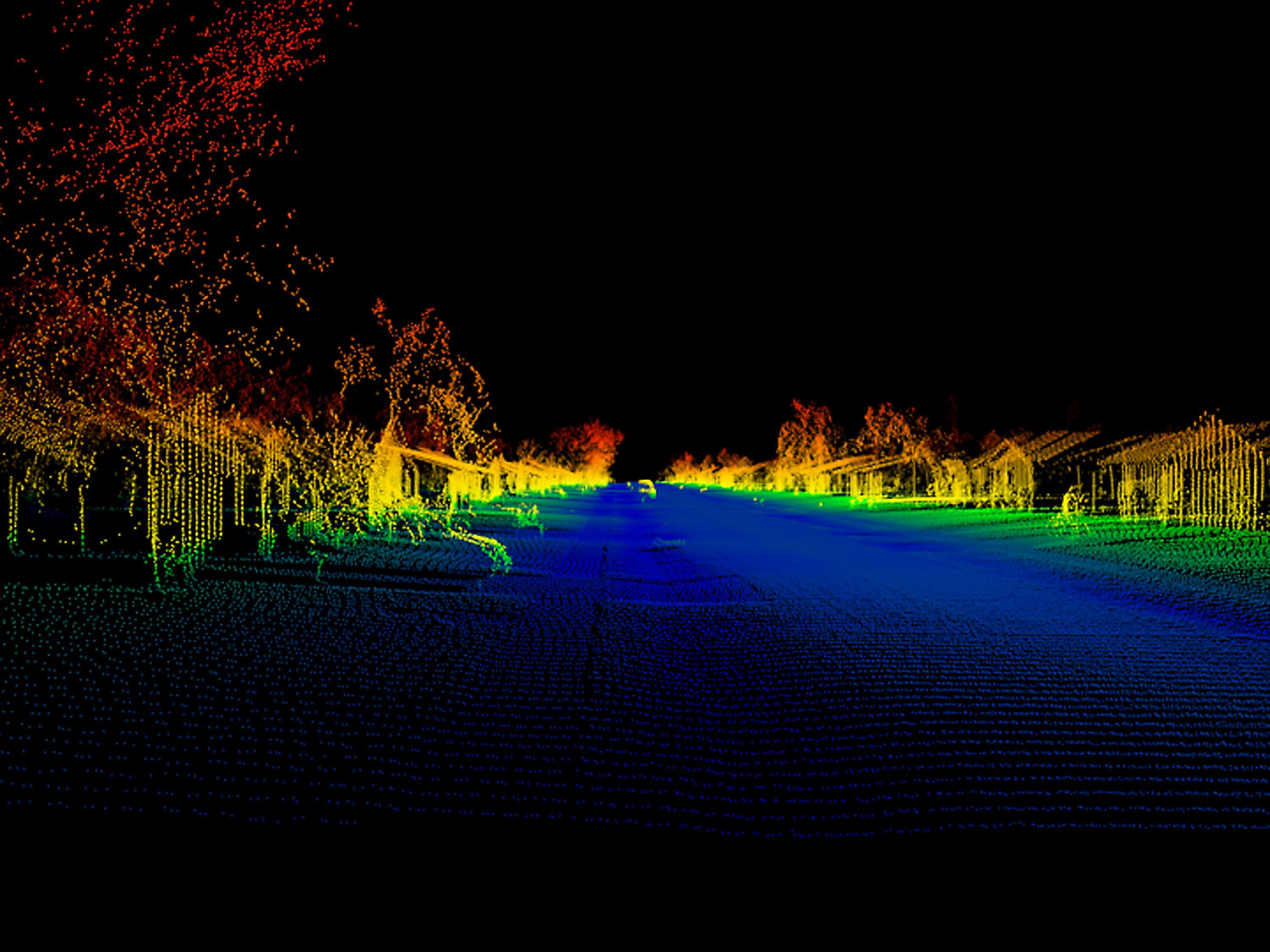
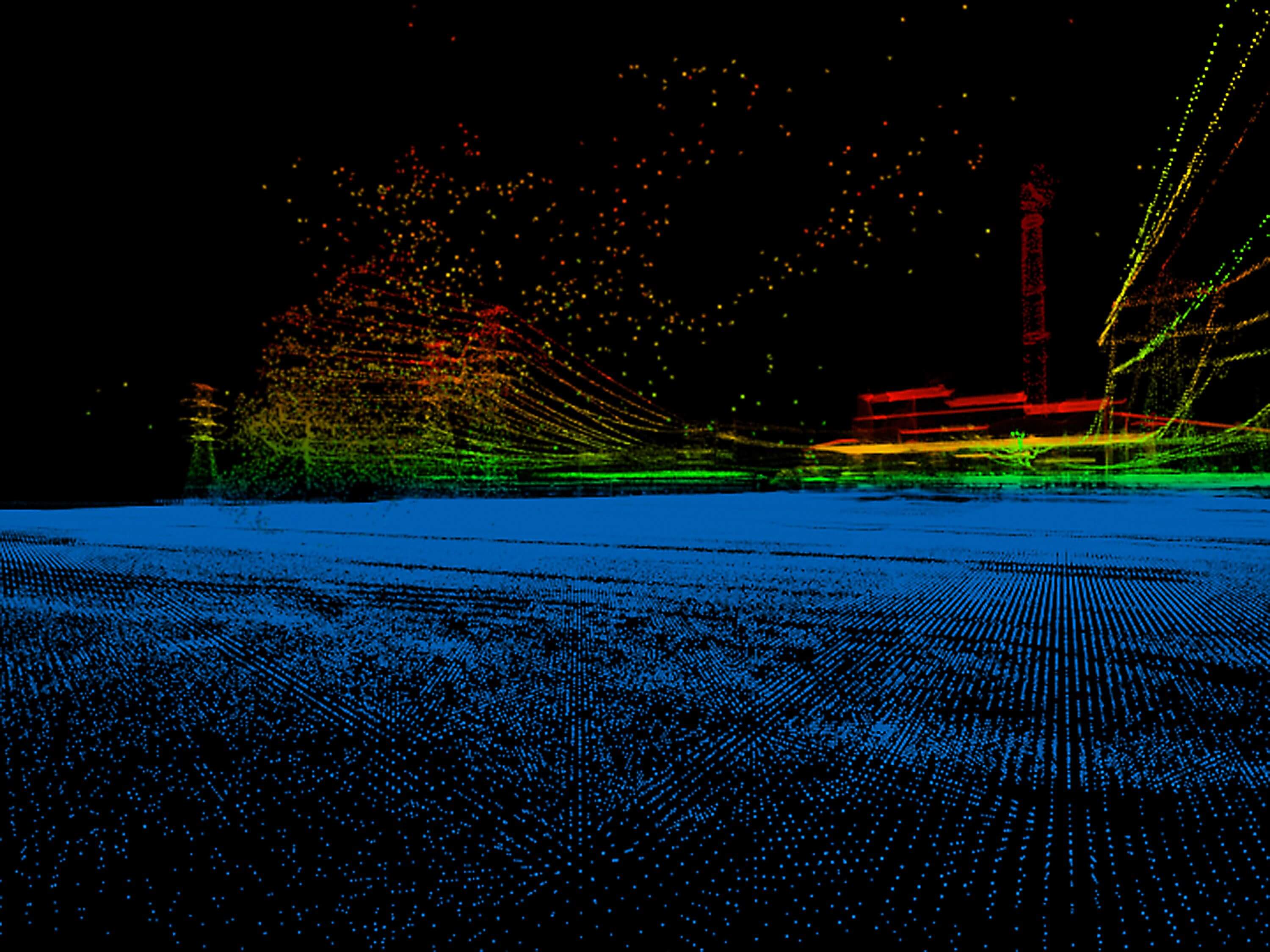
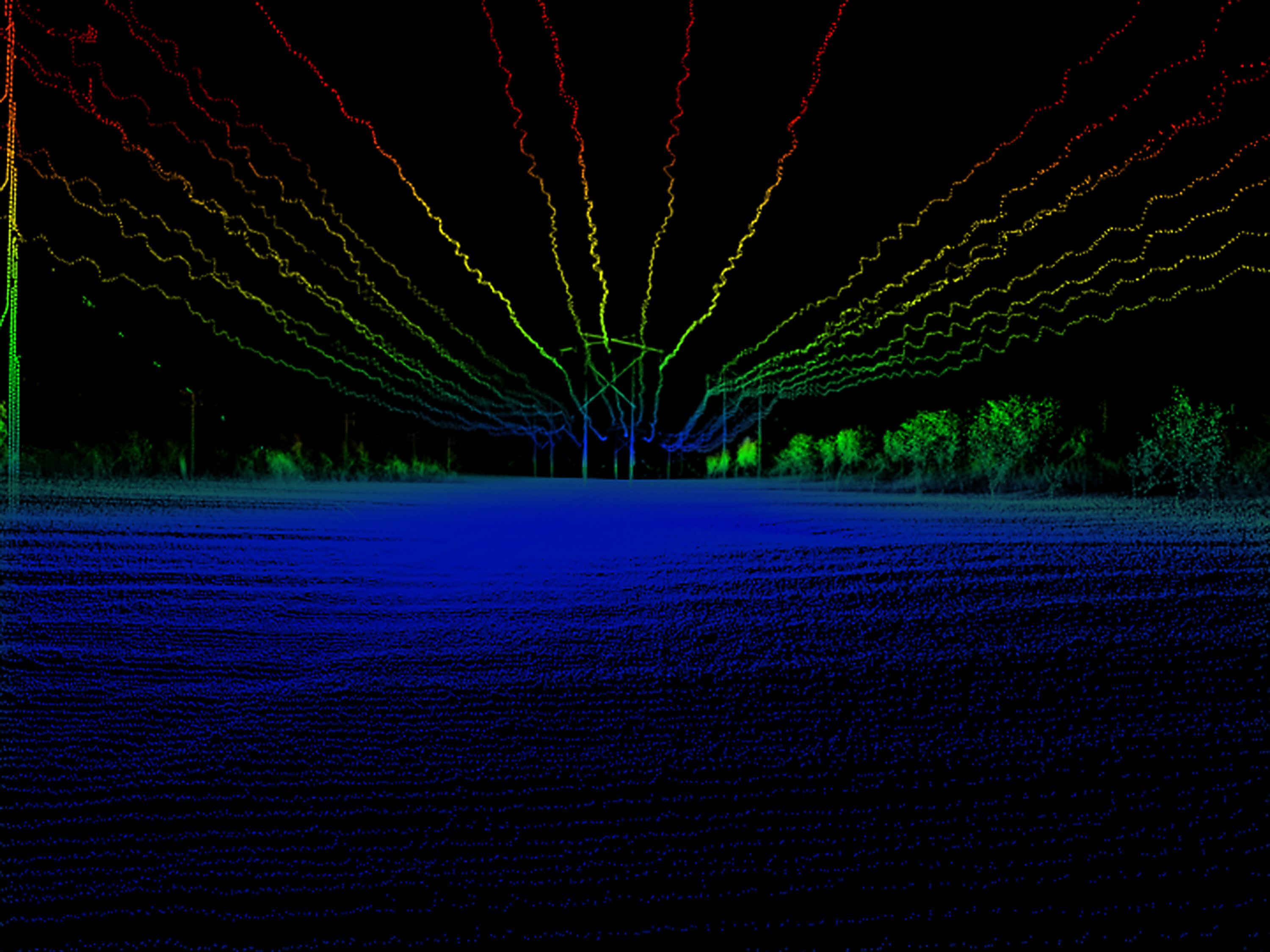
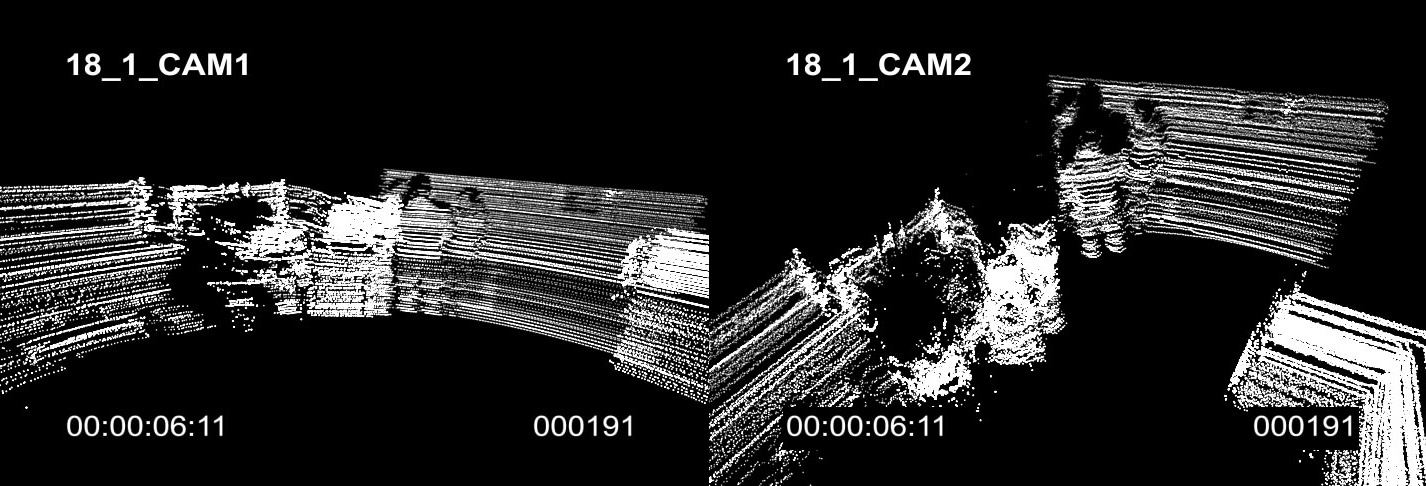
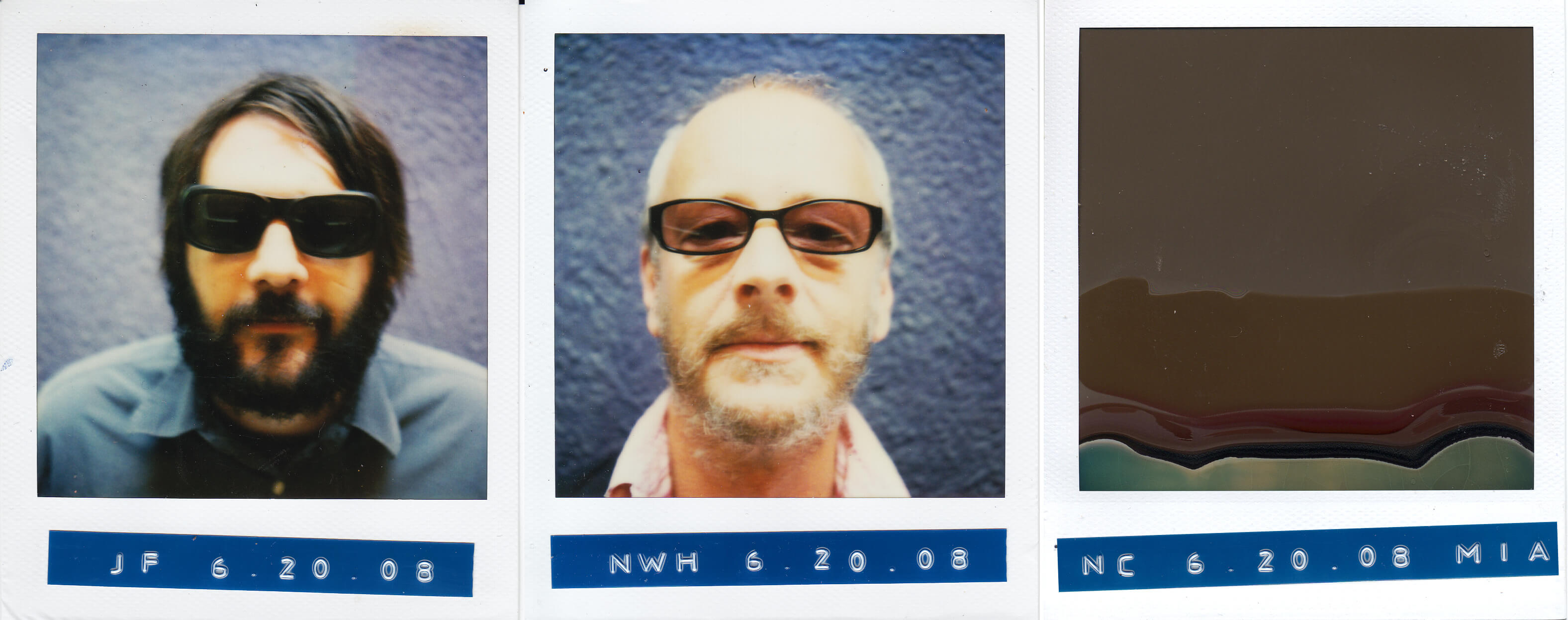
Finally, we got to sit down with colorist Beau Leon for the finishing color pass. The day had a certain significance beyond the work itself— Nicholas, Nathan Cali (his assistant at the time), and I had made a pact not to shave for the entire post-production period. I had managed a respectable beard, Nicholas looked as though a small rodent had taken up residence on his face, and Nate — well, he shaved that morning and disappeared to Hawaii, so the final tally was never properly documented. It wasn't pretty.
After six intensive weeks of post-production, the video was done. We learned it would be released through Google — the first time anything like that had happened — and that a section of the data would be made available as open source, giving the public access to build their own versions. After an initial rollout period, the video was officially released on YouTube on July19th, 2008.
The video went on to win multiple awards, including a D&AD Pencil for Outstanding Achievement in Music Video, and was nominated at the 51st Grammy Awards for Best Short Form Music Video as well as British Design of the Year. It was subsequently included in the Victoria and Albert Museum's landmark exhibition "Decode: Digital Design Sensations," which has since traveled the world.
Credits:
Director: James Frost
Producer: Dawn Fanning
Director of Photography: Yon Thomas
Lidar Scanning: Rick Yodar @ Velodyne
GeoVideo Imaging: Dale Royer @ Geometric Informatics
Editor: Nicholas Wayman Harris @ Union Editorial
VFX: The Syndicate
Managing Director: Kenny Solomon
VFX Supervisor: Ben Grossman
VFX Producer: Magdalena Wolf
CG Technical Director: Rodrigo Teixeira
CG Supervisor: Adam Watkins
Compositing Supervisor Alex Henning
Colorist: Beau Leon
Special thanks to Chris Hufford, Bryce Edge, Julie Calland, Thom Yorke, Jonny Greenwood, Ed O'Brien, Colin Greenwood, Phil Selway, Sharon Lord, Phil Costello, Dawn Fanning, Justin Glorieux, Song Zhang, Aaron Koblin, Larry Zience, Yon Thomas, Rick Yodar, Dale Royer, Alistair Thompson, Asher Edwards, The Mill (NY), everyone at G-Star Studios, Jim Dow, the late and greatly missed Nicholas Wayman-Harris and Michael Raimondi at Union Editorial, Ben Grossman, Magdalena Wolff, Kenny Solomon, Adam Watkins, Rodrigo Teixeira, Brandon Davis, and Beau Leon at the Syndicate.